Ceiling Water Damage Repair Stockbridge, GA: Find the Source, Dry It, Fix It Right
Stained, bulging, or dripping ceiling? Keep everyone out from under it and call (470) 821-0095. Calls are answered right away.
Or tell us what you see
Send the details and we will get back to you fast.
Request received
Thanks. We will call you back shortly. If water is still coming in, call (470) 821-0095 right now.
Response
Ceiling Water Damage Repair in Stockbridge, Done Right
Dry the structure, replace wet drywall and insulation, and finish the repair in Stockbridge, GA.
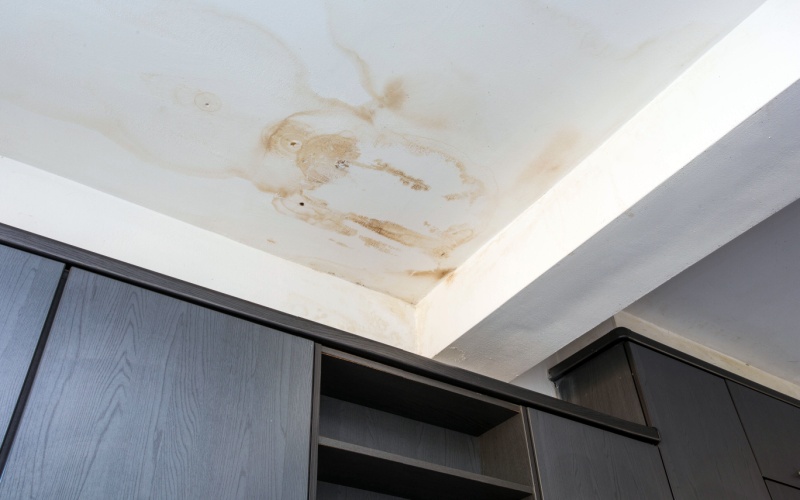
A ceiling stain is the last thing water leaves behind, not the first. By the time you see a brown ring, water has already soaked the drywall and probably the insulation above it. If you need ceiling water damage repair Stockbridge GA homeowners can call this week, the job is to find where the water came from, dry what is wet, and only then repair the ceiling, in that order.
Painting over a stain is the most common mistake. It hides the problem for a few weeks, and then the stain bleeds back through. A repair that lasts starts above the ceiling, not on it.
While you wait, keep people and pets out from under a sagging or bulging ceiling. Turn off power to any light or fan that is wet or near the stain, and shut off the water at the main valve if you think a pipe is the source. Photograph everything, and move furniture out of the way. Don’t poke a bulge or climb into a wet attic.
Is It Just a Stain, or Is the Drywall Ruined?
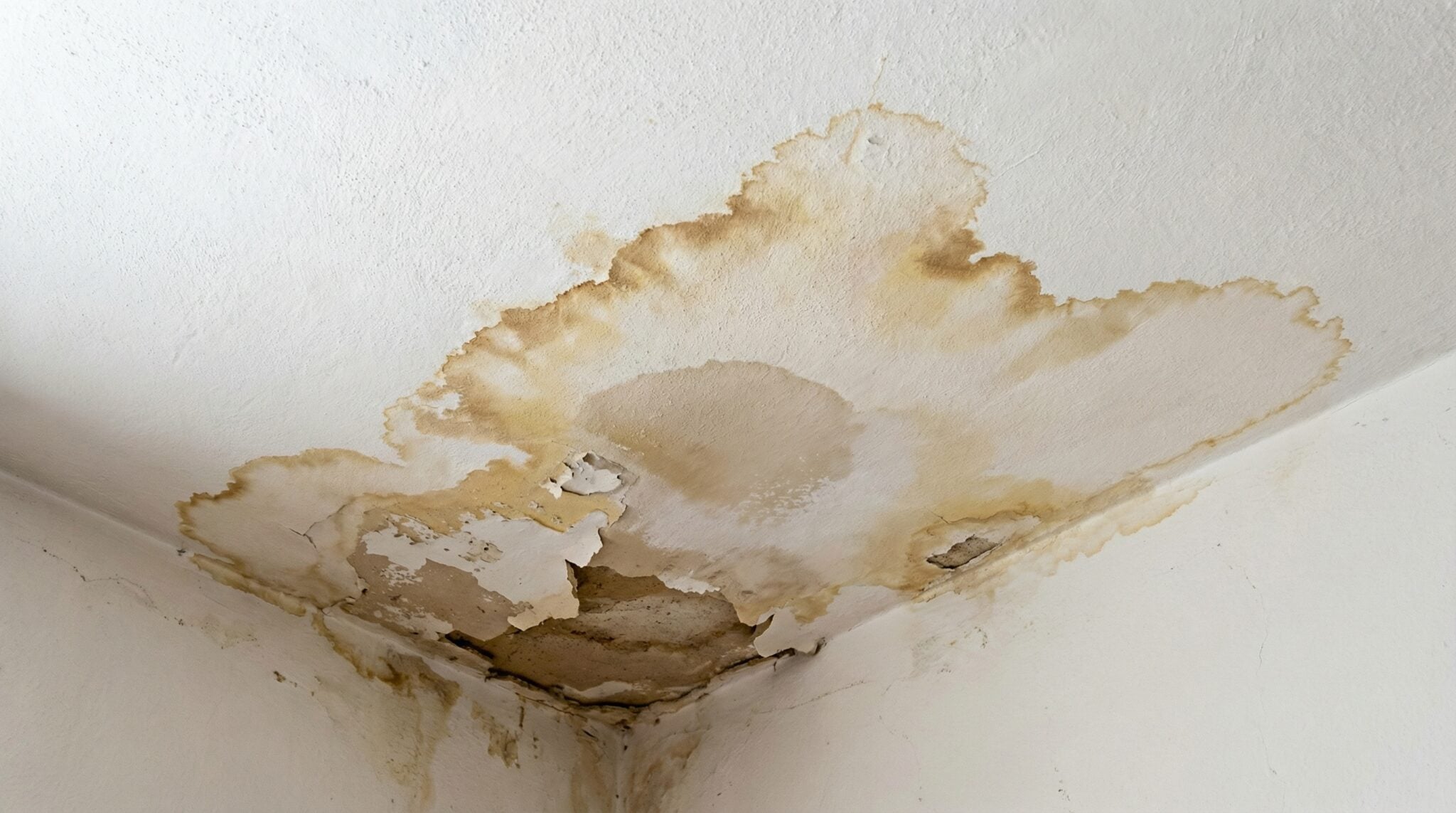
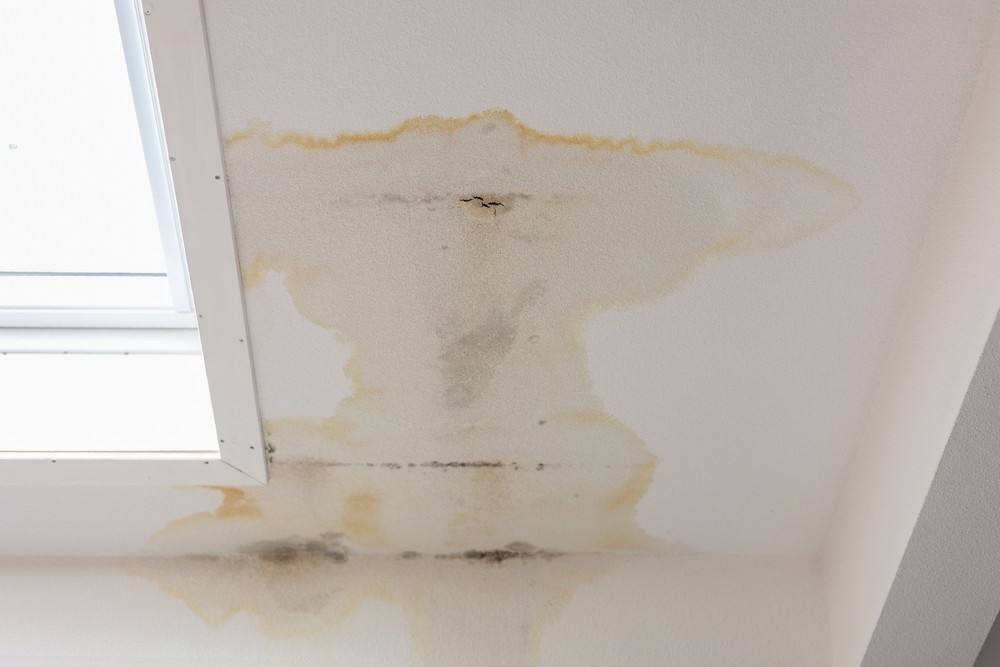
The ring you see is only the visible edge. This table shows what each sign usually means.
| What you see | What it usually means | Typical fix |
|---|---|---|
| Faint brown ring, dry and firm | An old leak that has stopped | Find the source, clean, prime with a stain blocker, repaint |
| Brown ring that is damp or growing | An active or recent leak | Stop the source, dry the ceiling, then repair |
| Bubbling or peeling paint | Moisture inside the drywall | Open, dry, and repair |
| Soft, crumbly, or sagging drywall | Saturated board | Remove and replace the section |
| A bulge holding water | Water pooled above the drywall | Stay out from under it and call us |
| Gray, chalky drywall core or loose tape | Board damaged past saving | Replace |
| Musty smell or visible mold | Mold in or above the ceiling | Containment and mold remediation |
A dry stain can still sit under wet insulation. That is why we check above the ceiling before we call anything fixed.
What the Stain Tells You About the Source
The stain doesn’t prove where the leak is, but timing and location give strong clues.
| Clue | Likely source | Who fixes it first |
|---|---|---|
| Appears or grows during or after rain, on the top floor, or under a skylight or chimney | Roof or flashing | A roofer |
| Sits below an upstairs bathroom, kitchen, or laundry, grows after showers or fixture use, and shows up in any weather | Plumbing: a supply line, drain, tub, or toilet | A plumber |
| Sits under or near the attic air handler or along the condensate line, and shows up in hot, humid months | AC condensate line or drain pan | An HVAC technician |
| Sits around vents or along ducts | Duct condensation | An HVAC technician |
If your air handler is in the attic, a clogged condensate line on a hot, humid afternoon can soak the ceiling below without ever dripping. A darker center usually means water is still arriving. An even brown ring with no growth is usually an old, dried leak.
Water also travels along framing and pipes before it shows, so the stain can be a few feet from the real leak. We find the true source with moisture meters and thermal imaging. We repair ceilings. A plumber, roofer, or HVAC technician fixes the leak itself, and we coordinate with them.
Is It Safe? Sagging Ceilings, Wet Fixtures, and Electrical Risk
A ceiling that bulges or sags may be holding water, and it can come down without warning. Wet insulation above it is heavy, and the weight adds up.
- Stay out from under it. Move people and pets to another room.
- Don’t poke it or prop it. Puncturing a bulge to drain it puts you directly under falling water and debris, and water may be sitting on top of wiring.
- Treat light fixtures and ceiling fans as live. Water and wiring are a shock risk. Turn off the breaker for that circuit only if you can reach the panel without standing in water.
- Don’t go into a wet attic. Insulation hides joists, and wet drywall can’t carry your weight.
- If the water came from a sewage backup or storm runoff, treat it as contaminated and see Sewage Cleanup.
If you are unsure whether it is safe, call us before you do anything else.
Emergency Ceiling Water Damage Repair, Step by Step
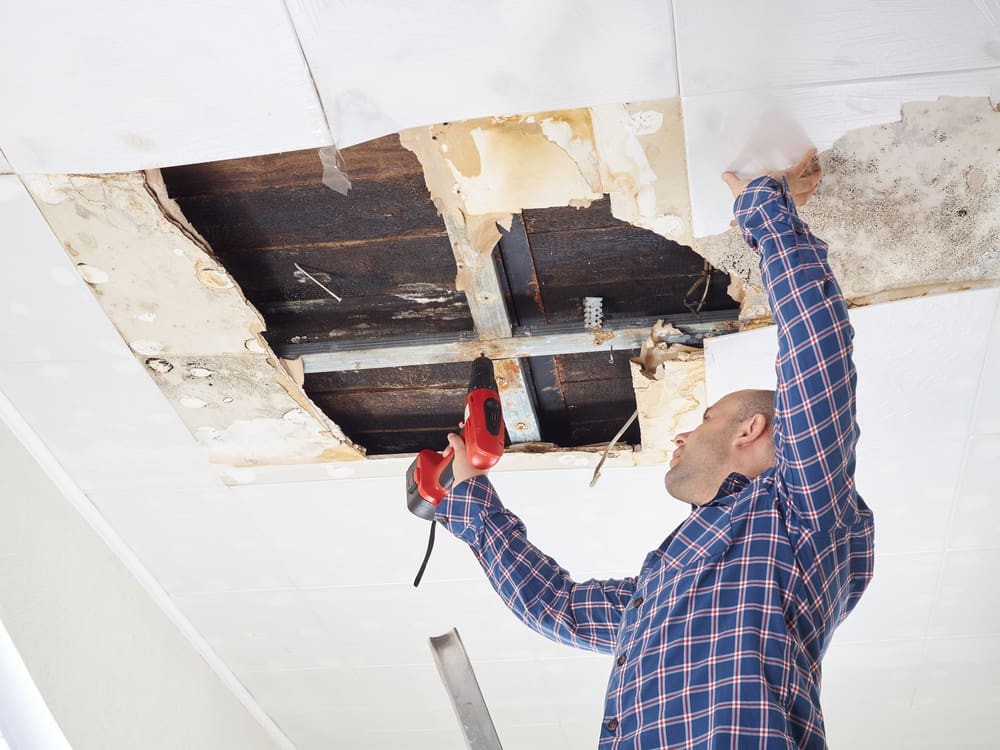
We follow the same order every time: find the source, dry what is wet, then repair.
Find and Confirm the Source
Moisture meters and thermal imaging show where the water went and whether it is still arriving. We don’t start repairs until the leak has been stopped.
Open and Inspect Above the Ceiling
We cut a small access opening to check the insulation, the joists, and the back of the drywall, because the damage above is usually bigger than the stain below.
Remove What Can’t Be Saved
Soaked drywall, wet insulation, and ruined ceiling tiles come out and are bagged. Soft, crumbly, sagging, or moldy board is never patched over.
Dry the Cavity
Air movers and dehumidifiers dry the opened cavity, and we check moisture readings until the framing and remaining materials are dry. Typical drying takes about three to five days, longer for severe leaks.
Repair and Finish
New drywall is cut to match the thickness of the old, then screwed, taped, and finished with joint compound and sanded smooth. The patch is primed with a stain-blocking primer so the old stain can’t bleed through, the texture is matched, and the ceiling is painted. (Keep this step only if the contractor’s license covers the repair work.)
Patch or Replace? What Decides It
| Condition of the drywall | Typical decision |
|---|---|
| Firm and dry, small stain | Clean, prime with a stain blocker, repaint |
| Soft or spongy | Replace the section |
| Sagging or bowed | Replace |
| Tape peeling or blistering | Replace the section |
| Mold present | Remove, and handle as mold |
| Gray, chalky core | Replace |
Fix Water Damaged Ceiling Drywall Without the Stain Coming Back
To fix water damaged ceiling drywall for good, the board has to be dry and sound first, and the stain has to be sealed with a shellac- or oil-based stain-blocking primer. Ordinary paint or primer won’t stop a water stain from bleeding through, sometimes years later.
Ceiling Repair Water Damage: What a Lasting Repair Includes
A lasting ceiling repair water damage job has four parts: dry framing and insulation, sound replacement drywall, a stain-blocking primer under the paint, and a fix for the source so it doesn’t happen again. Drying alone doesn’t restore damaged drywall, and a repair without a dry cavity behind it fails.
Call now, we answer 24/7
Every minute counts with water damage. Our Stockbridge crew is ready to roll.
Call (470) 821-0095What You Can Do Yourself, and Where to Stop
How to Repair a Ceiling From Water Damage: The DIY Version
If you are looking up how to repair a ceiling from water damage yourself, here is the honest version. A small stain on a firm, dry ceiling is a reasonable DIY job: confirm the leak is fixed and the ceiling is dry, clean the stain, seal it with a shellac- or oil-based stain-blocking primer, and repaint. Anything beyond that means opening the ceiling, drying the cavity, and replacing drywall.
Stop and call a professional if any of these apply:
- The ceiling is sagging, bulging, or soft
- The insulation above is wet or the damage covers more than a small patch
- Mold covers more than about 10 square feet, or you smell it but can’t find it
- Light fixtures, a ceiling fan, or wiring are involved
- The water came from sewage or storm runoff
- You can’t find the source, or the stain keeps coming back
- The ceiling is textured and the house was built before the mid-1980s (see below)
Ceiling Leaks and Your Insurance
Call (470) 821-0095 and we’ll walk you through what to document and what to expect.
Hidden Moisture, Mold, and Older Ceilings
Wet insulation above a ceiling can stay wet for weeks, which is why ceilings that look fixed get stained again. Mold can grow on the top side of drywall and in the insulation, out of sight. Ceiling water damage repair services that skip the drying step are the main reason stains come back, so we check the cavity with meters before any new drywall goes up. If we find mold, we show you and explain the next steps. See Mold Remediation.
Older textured ceilings. If your home was built before the mid-1980s and has a popcorn or other textured ceiling, don’t scrape, sand, or scrub it, wet or dry. Textured ceiling products from that era can contain asbestos, you can’t tell by looking, and a lab test is the only way to know. We hold off on any work that would disturb a suspect ceiling until it has been tested.
Ceiling Water Damage Repair Near Me: Homes, Apartments, and Commercial Properties
We repair ceilings in houses, townhomes, and apartments, and in offices and retail spaces, where we replace wet suspended ceiling tiles and the insulation or drywall above them. Property managers can call the same number for priority response, with written documentation and photos for each job.
Ceiling Water Damage FAQs
Can I just paint over a water stain on my ceiling?
Not safely. Ordinary paint won’t hold a stain back, and covering it hides a leak that may still be active. Fix the source, make sure the ceiling is dry, seal the stain with a shellac- or oil-based stain-blocking primer, then paint.
Is a sagging ceiling dangerous?
Yes. A sagging or bulging ceiling may be holding water and can collapse without warning. Keep people and pets out from under it and call us.
Should I poke a hole in a bulging ceiling to drain it?
We advise against it. You would be standing under the water and falling debris, and the water may be sitting on top of wiring. Stay clear and call.
How do I know if the leak is still active?
A damp, cool stain, a darker center, or a stain that grows after rain, showers, or hot days points to an active leak. A dry, even brown ring with no growth is usually an old leak. Moisture meters give the real answer.
Who should I call first: a roofer, a plumber, or you?
If the ceiling is wet or damaged, call us. We find where the moisture is and tell you which trade fixes the source, and we coordinate the repair. The leak itself still has to be stopped by a roofer, plumber, or HVAC technician.
How long does ceiling repair take?
It depends on how far the water spread. The affected area has to dry first, typically about three to five days, and the drywall repair comes after that. We give you a timeline once we have seen the damage.
Does the insulation above the ceiling have to be replaced?
Wet insulation usually does, because it holds water and promotes mold. We check it through the access opening and replace what is soaked.
How do I choose who to call?
If you’re comparing options for ceiling water damage repair near me, ask whether the company dries the cavity before repairing, how it finds the source, and whether it gives you a written scope.
Does insurance cover a ceiling leak?
Call (470) 821-0095 and we’ll walk you through what to document.
A Wet Ceiling Won't Wait. Call Now.
Call (470) 821-0095 and we'll tell you what to do first, find where the moisture is, and give you a written scope. Calls are answered right away.